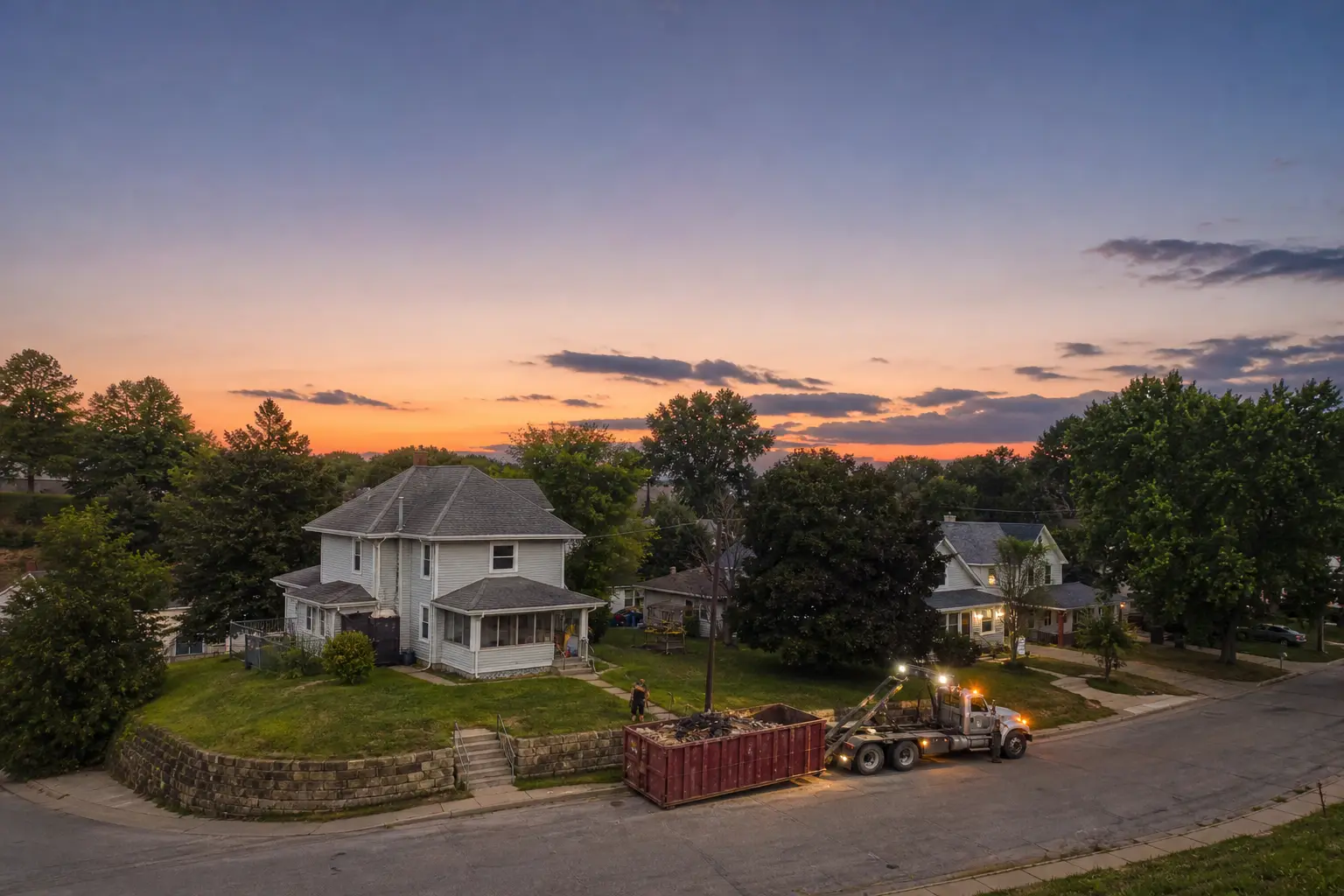
- Open 24/7, Monday to Sunday
- Serving Wright County
Common Woolstock jobs
Woolstock cleanouts call for the right container plan
These six dumpster options cover the residential work most often associated with Woolstock properties. The best fit depends on what is being removed, how densely it can be loaded, and whether the truck can reach the intended placement.
House Cleanout Dumpsters
For Woolstock house cleanouts, a container keeps furniture, boxed belongings, worn flooring, and ordinary household debris together while rooms are cleared. Leave a firm approach and separate restricted materials before loading begins.
Residential cleanoutsGarage and Basement Cleanouts
Woolstock garages and basements often hold mixed household contents for years. A dumpster gives the crew one loading point, but low basement access, narrow garage doors, and driveway slope should be explained beforehand.
Storage area clearingRoofing Debris Dumpsters
Roof work near Woolstock can produce heavy shingles that fill a container faster than light household waste. Place the dumpster close enough for ground-level loading while keeping soft shoulders, trees, and equipment clear.
Roofing materialHome Renovation Dumpsters
Bathroom, kitchen, and room updates at Woolstock homes create a changing mix of cabinets, drywall, flooring, and packaging. Confirm the expected material before delivery so the selected size and loading plan match the work.
Remodel debrisYard Waste Dumpsters
Seasonal yard work around Woolstock may involve branches, brush, storm debris, and old landscaping material. Keep soil, liquids, and other restricted items separate, and describe the load before choosing a container.
Seasonal yard workMoving and Estate Cleanouts
Moving and estate cleanouts in Woolstock can combine furniture, boxes, appliances, and accumulated household items. Sort reusable or restricted materials first, then reserve a placement area that family and movers can still reach.
Move-out debris
Woolstock conditions
Woolstock properties need practical placement planning
Woolstock is a small Wright County community where many cleanup jobs happen at established homes with older driveways, detached garages, mature trees, and limited room to swing a truck into position. A container may fit on paper yet still be a poor choice if branches, utility lines, parked equipment, or a soft shoulder block the approach. Fernando Dumpster Rental checks access and debris limits before delivery so the driver knows where the container belongs and what the loading area can handle. That review is useful for basement cleanouts, household moves, and projects around the town’s residential streets, where protecting pavement and keeping access open can matter more than choosing the largest available size.
Spring thaw and heavy rain can change a placement decision quickly around Woolstock. Gravel shoulders and unpaved side approaches may soften, while frost movement can leave an older drive uneven. Summer work brings dry dust, strong sun, and occasional storms that can blow loose cardboard or lightweight material from an uncovered load. Fall cleanouts often involve leaves, branches, and household contents being staged close to the driveway. The container still needs level support, safe loading clearance, and a route that does not force the truck across fragile ground. Tell Fernando Dumpster Rental whether the container will sit on concrete, asphalt, gravel, or another surface, and describe any slope before delivery is scheduled.
Woolstock’s residential character makes the project details especially important. A modest bathroom update, garage cleanout, or estate transition usually needs a different container plan than demolition at a commercial property. Streets near Main Street and the Iowa Highway 17 corridor can have different turning and staging conditions than a driveway farther from the center of town. Public placement may also require local permission, while private placement still depends on overhead clearance and truck access. Fernando Dumpster Rental can discuss the proposed location, the material going inside, and the loading method before the container leaves Eagle Grove. Have the property address, surface type, approximate debris, and any access restrictions ready when you speak with the crew.
Before delivery
Prepare the Woolstock property before the truck arrives
- Clear Woolstock driveway edges of vehicles, branches, toys, and household debris before delivery.
- Tell the crew whether the Woolstock placement surface is pavement, gravel, soil, or another material.
- Measure gate openings and note low branches along the proposed Woolstock truck route.
- Separate restricted materials from household, renovation, roofing, and yard debris before loading.
- Keep the Woolstock container area accessible for loading throughout the cleanup project.
Weather and timing
Woolstock weather changes how dumpsters are placed
Weather affects more than the day a Woolstock dumpster arrives. During spring thaw, a gravel drive or grass edge may not support the truck or the container, especially after rain. A level paved area is usually easier to use, but it still needs clearance from branches, utility lines, parked vehicles, and buildings. Summer storms can interrupt loading and spread light debris, so keep loose cardboard and plastic secured instead of piling material above the rim. Fall cleanouts bring shorter daylight and wet leaves that can make walking surfaces slick. Share the surface, slope, recent rain, and nearby obstacles before scheduling. A placement that works during dry weather may need to move onto stronger ground after a storm.
The loading sequence matters during Iowa’s freeze and thaw cycle. If demolition starts before the container arrives, stacked debris can block the truck’s approach or force workers to carry heavy pieces farther than planned. If the container is set too close to a garage or fence, doors and equipment may become unusable. Woolstock homeowners should keep the intended pad clear, mark low branches or hidden edges, and avoid placing loose debris on the approach. Fernando Dumpster Rental confirms placement access and debris limits before each delivery, then uses those details to coordinate the container with the property conditions. Weather cannot be controlled, and a saturated or unsafe surface may require a different placement decision.
keyPoints:[
Check Woolstock driveway firmness after rain or thaw before selecting the container location.
Keep branches, vehicles, utility lines, and staged debris outside the truck’s access path.
Secure lightweight renovation and household material before summer storms reach the Woolstock property.
Dumpster questions
Answers for Woolstock dumpster projects
How much does a dumpster rental cost in Woolstock?
Woolstock dumpster pricing depends on container size, delivery placement, rental duration, debris type, loading access, and whether the site needs special handling. A compact bathroom cleanup costs less to plan than a large renovation or dense roofing load because space and disposal requirements differ. Tell the crew whether the container will sit on pavement, gravel, or soft ground, and describe the material before choosing a size. Have the address, project type, approximate debris, and preferred placement ready when you call.
What dumpster size works for a Woolstock house cleanout?
A Woolstock house cleanout commonly needs a 10-Yard, 15-Yard, 20-Yard, or larger container depending on the number of rooms, furniture volume, and density of the debris. Small bathroom work may fit the smallest tier, while an estate cleanout or whole-home move-out can require more room. Older Woolstock homes may also have detached garages or basements that add material. List the rooms, bulky items, flooring, appliances, and driveway constraints so the crew can recommend a practical size.
Can a dumpster sit on a Woolstock street?
A dumpster placed on a Woolstock public street usually needs local permission before delivery, and the exact requirement depends on the location and road conditions. Private driveways are often simpler, but the truck still needs a clear route, adequate overhead clearance, and a surface that can support placement. Main Street and the Iowa Highway 17 corridor may have different access considerations than a private residential drive. Tell the crew where the container must sit so they can explain what should be checked before scheduling.
How should I prepare my Woolstock driveway for delivery?
Prepare a Woolstock driveway by removing vehicles and loose objects, clearing branches, checking for low wires, and leaving a straight approach to the placement area. The surface should be reasonably level and firm enough for the truck and loaded container, especially after spring rain or thaw. Gravel and older pavement deserve a closer look because soft edges or uneven sections can limit placement. Mark hidden obstacles, keep the route open, and provide the surface type and approximate width when discussing delivery.
What can I put in a Woolstock dumpster?
A Woolstock dumpster can generally handle ordinary household cleanout debris, renovation material, roofing waste, and many yard cleanup materials, subject to the load’s size, weight, and disposal requirements. Liquids, hazardous products, certain appliances, tires, and other restricted items may need separate handling. Do not mix questionable materials into the container before confirming they are allowed. Sort paint, chemicals, batteries, propane items, and other uncertain waste aside, then describe the complete load and the property conditions to the crew.
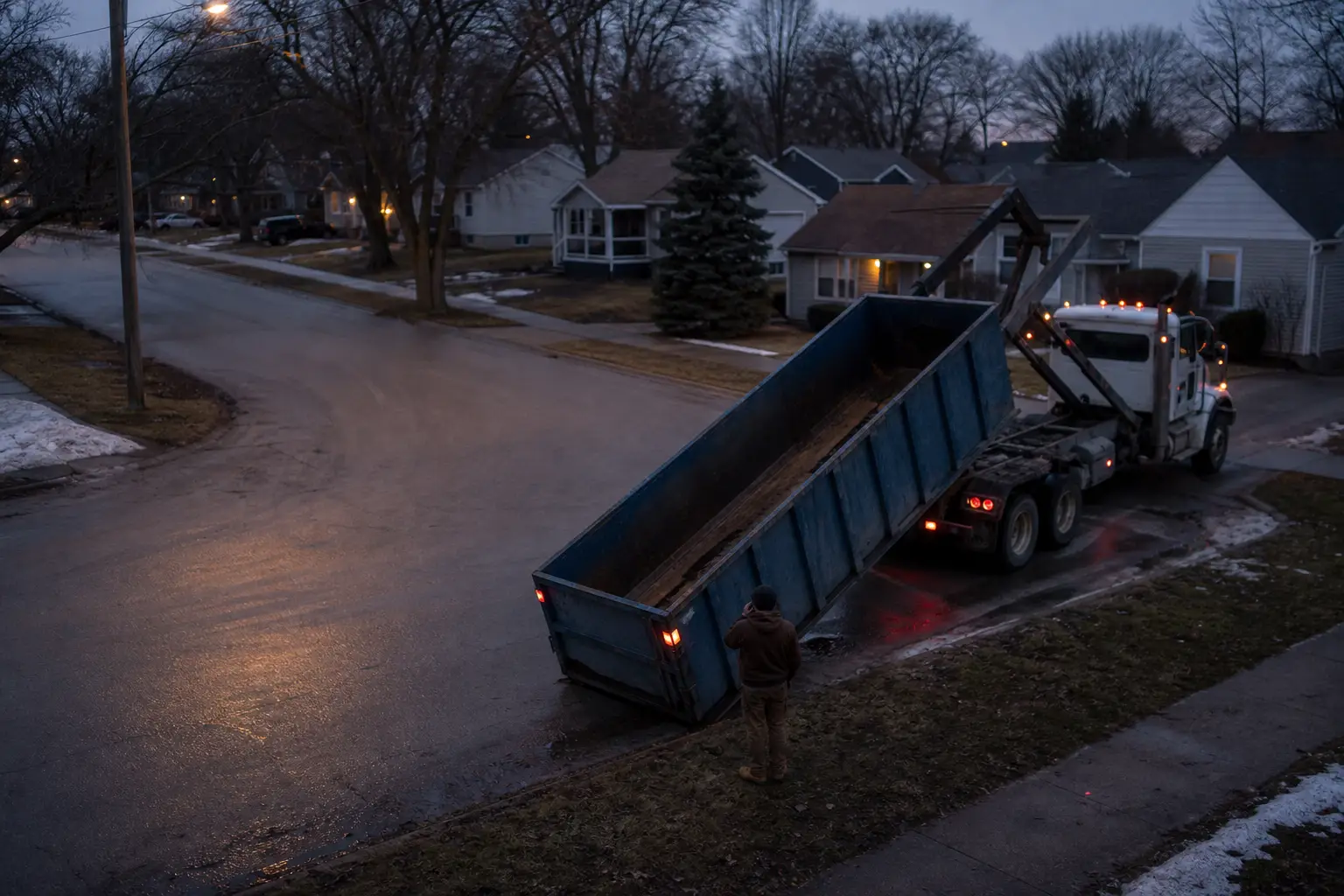
Plan the Woolstock container around the property
Have the Woolstock address, project type, debris list, surface, and access concerns ready. Fernando Dumpster Rental is available 24/7, Monday to Sunday, to discuss the placement and container tier that fit the job.
Click Here to Call(515) 603-0631Local delivery area
Dumpster delivery follows Woolstock access conditions
Fernando Dumpster Rental serves residential and project sites around Woolstock, including the town center, Main Street properties, homes along the Iowa Highway 17 corridor, and nearby rural approaches connected to the community. Placement is based on the actual address, surface, turning room, overhead clearance, and debris plan. Share those details early so the delivery can be coordinated from Eagle Grove without guessing about the route or the container pad.